
Adventures in Brinesia










 Tropical rainforest

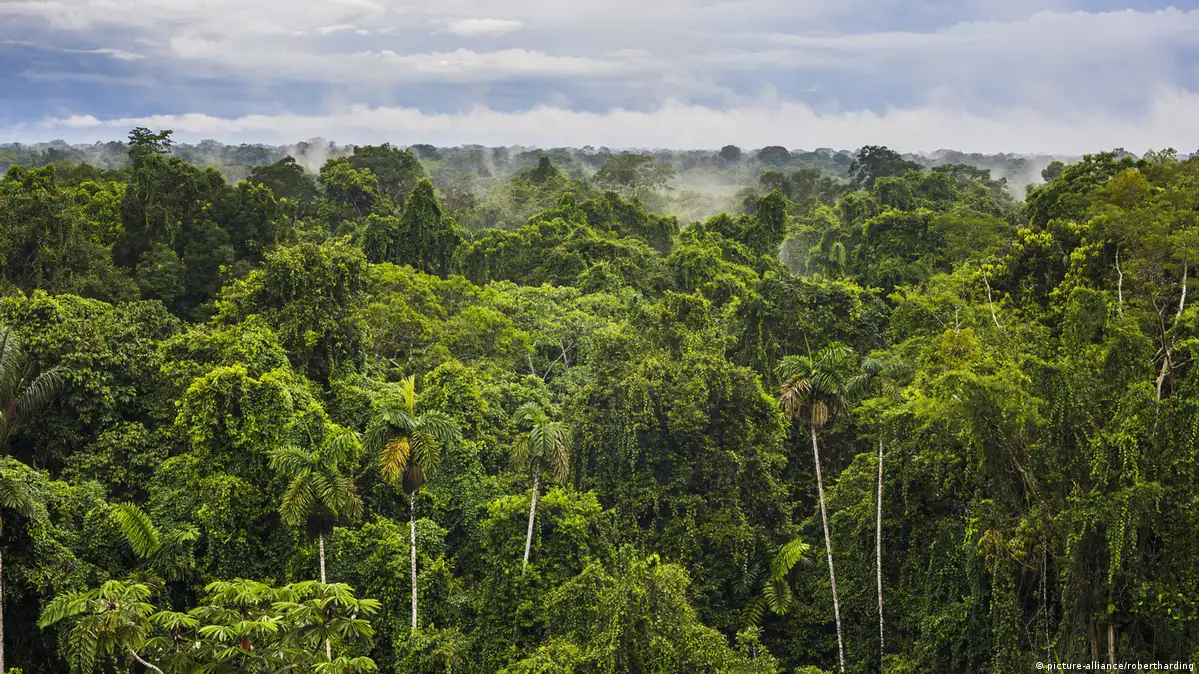

An area of tall, mostly evergreen trees and a high amount of rainfall.
Score 550
02/07/23A rainforest is an area of tall, mostly evergreen trees and a high amount of rainfall.
Rainforests are the oldest living ecosystems, with some surviving in their present form for at least 70 million years. They are incredibly diverse and complex, home to more than half of the world’s plant and animal species—even though they cover just 6% of the surface. This makes rainforests astoundingly dense with flora and fauna; a 10-square-kilometer (4-square-mile) patch can contain as many as 1,500 flowering plants, 750 species of trees, 400 species of birds and 150 species of butterflies.
Rainforests’ rich biodiversity is incredibly important to our well-being and the well-being of our planet. Rainforests help regulate our climate and provide us with everyday products.
Unsustainable industrial and agricultural development, however, has severely degraded the health of the world’s rainforests. Citizens, governments, intergovernmental organizations, and conservation groups are working together to protect these invaluable but fragile ecosystems.
Rainforest Structure
Most rainforests are structured in four layers: emergent, canopy, understory, and forest floor. Each layer has unique characteristics based on differing levels of water, sunlight, and air circulation. While each layer is distinct, they exist in an interdependent system: processes and species in one layer influence those in another.
Emergent Layer
The top layer of the rainforest is the emergent layer. Here, trees as tall as 60 meters (200 feet) dominate the skyline. Foliage is often sparse on tree trunks, but spreads wide as the trees reach the sunny upper layer, where they photosynthesize the sun’s rays. Small, waxy leaves help trees in the emergent layer retain water during long droughts or dry seasons. Lightweight seeds are carried away from the parent plant by strong winds.
Animals often maneuver through the emergent layer’s unstable topmost branches by flying or gliding. Animals that can’t fly or glide are usually quite small—they need to be light enough to be supported by a tree’s slender uppermost layers.
The animals living in the emergent layer of the rainforest include birds, bats, gliders, and butterflies. Large raptors, such as white-tailed hawks and harpy eagles, are its top predators.
Bats are the most diverse mammal species in most tropical rainforests, and they regularly fly throughout the emergent, canopy, and understory layers.
Canopy Layer
Beneath the emergent layer is the canopy, a deep layer of vegetation roughly 6 meters (20 feet) thick. The canopy’s dense network of leaves and branches forms a roof over the two remaining layers.
The canopy blocks winds, rainfall, and sunlight, creating a humid, still, and dark environment below. Trees have adapted to this damp environment by producing glossy leaves with pointed tips that repel water.
While trees in the emergent layer rely on wind to scatter their seeds, many canopy plants, lacking wind, encase their seeds in fruit. Sweet fruit entices animals, which eat the fruit and deposit seeds on the forest floor as droppings. Fig trees, common throughout most of the world’s tropical rainforests, may be the most familiar fruit tree in the canopy.
With so much food available, more animals live in the canopy than any other layer in the rainforest. The dense vegetation dulls sound, so many—but not all—canopy dwellers are notable for their shrill or frequent vocalizing. In the rainforest, canopy fruit is snatched up in the large beaks of screeching scarlet macaws and keel-billed toucans, and picked by barking spider and howler monkeys. The silent two-toed sloth chews on the leaves, shoots, and fruit in the canopy.
Thousands and thousands of insect species can also be found in the canopy, from bees to beetles, borers to butterflies. Many of these insects are the principal diet of the canopy’s reptiles, including the "flying" draco lizards.
Understory Layer
Located several meters below the canopy, the understory is an even darker, stiller, and more humid environment. Plants here, such as palms and philodendrons, are much shorter and have larger leaves than plants that dominate the canopy. Understory plants’ large leaves catch the minimal sunlight reaching beyond the dense canopy.
Understory plants often produce flowers that are large and easy to see. Others have a strong smell, such as orchids. These features attract pollinators even in the understory’s low-light conditions.
The fruit and seeds of many understory shrubs in temperate rainforests are edible. The temperate rainforests bloom with berries.
Animals call the understory home for a variety of reasons. Many take advantage of the dimly lit environment for camouflage. The spots on a jaguar may be mistaken for leaves or flecks of sunlight, for instance. The green mamba, one of the deadliest snakes in the world, blends in with foliage as it slithers up branches in the rainforest. Many bats, birds, and insects prefer the open airspace the understory offers. Amphibians, such as dazzlingly colored tree frogs, thrive in the humidity because it keeps their skin moist.
Tropical rainforest canopies and understories are home to some of the most endangered and familiar rainforest animals—such as forest elephants, pythons, antelopes, and gorillas. Gorillas, a critically endangered species of primate, are crucial for seed dispersal. Gorillas are herbivores that move throughout the dark, dense rainforest as well as more sun-dappled swamps and jungles. Their droppings disperse seeds in these sunny areas where new trees and shrubs can take root. In this way, gorillas are keystone species in many rainforest ecosystems.
Forest Floor Layer
The forest floor is the darkest of all rainforest layers, making it extremely difficult for plants to grow. Leaves that fall to the forest floor decay quickly.
Decomposers, such as termites, slugs, scorpions, worms, and fungi, thrive on the forest floor. Organic matter falls from trees and plants, and these organisms break down the decaying material into nutrients. The shallow roots of rainforest trees absorb these nutrients, and dozens of predators consume the decomposers!
Animals such as wild pigs, armadillos, and anteaters forage in the decomposing brush for these tasty insects, roots and tubers of the rainforest. Even larger predators, including leopards, skulk in the darkness to surprise their prey. Smaller rodents, such as rats and lowland pacas, hide from predators beneath the shallow roots of trees that dominate the canopy and emergent layer.
Rivers that run through some tropical rainforests create unusual freshwater habitats on the forest floor.
Connections
Lorem ipsum dolor sit amet, consectetur adipiscing elit, sed do eiusmod tempor incididunt ut labore et dolore magna aliqua. Ut enim ad minim veniam, quis nostrud exercitation ullamco laboris nisi ut aliquip ex ea commodo consequat.
Lorem ipsum dolor sit amet, consectetur adipiscing elit, sed do eiusmod tempor incididunt ut labore et dolore magna aliqua. Ut enim ad minim veniam, quis nostrud exercitation ullamco laboris nisi ut aliquip ex ea commodo consequat.
New Card