
Adventures in Brinesia










Nal'a province

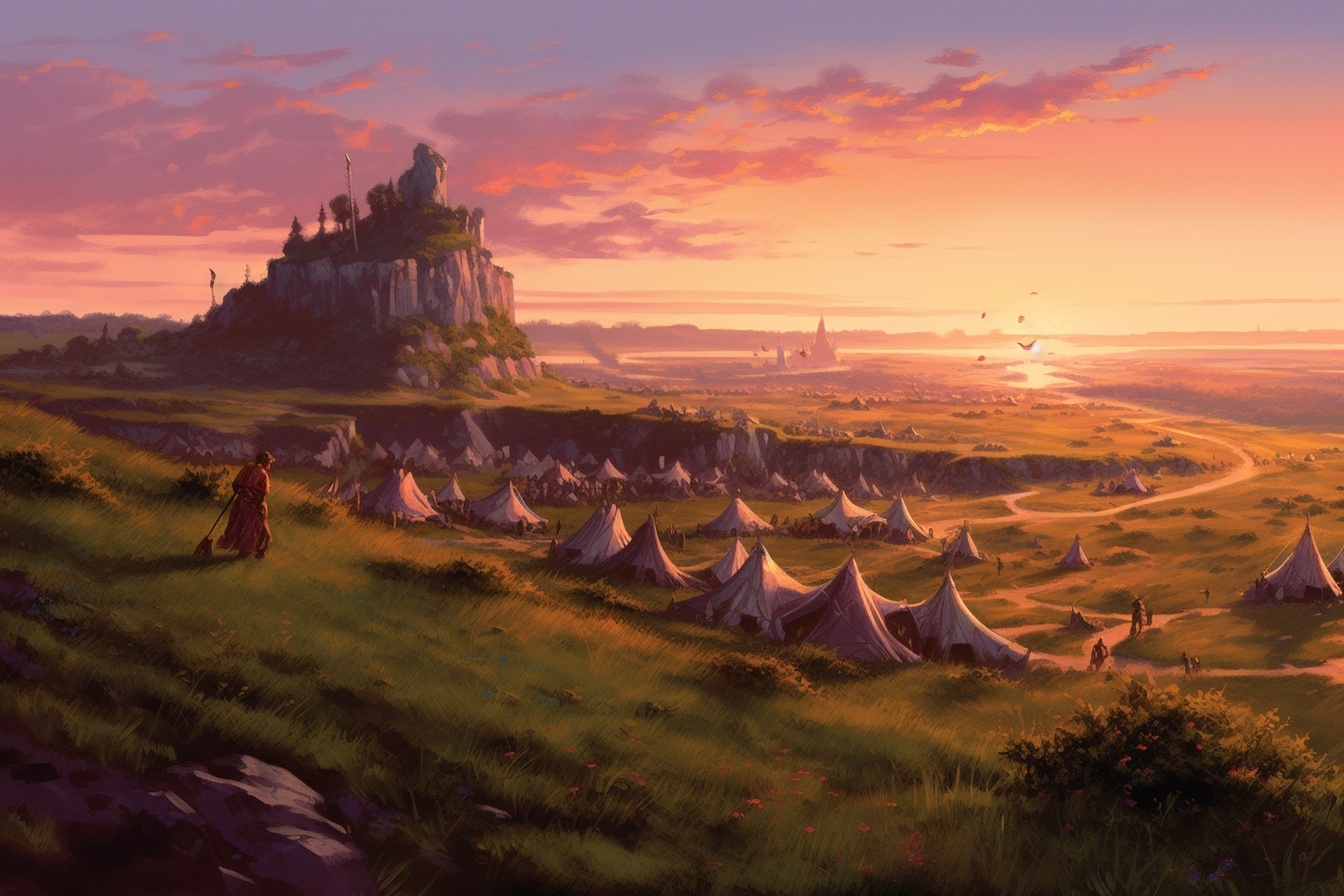

The northern province of Srath, dominated by vast grasslands
Score 744
01/21/25Location: The largest province of Srath, situated in the central part of the empire, bordering the Kingdom of Pagen to the east, the province of Mub to the northeast, and the Protectorate of Karesh to the north.
Geography: Nal'a is a vast territory dominated by grasslands, with arid and hot deserts in its northeastern region. The landscape is dotted with occasional oases, providing vital water sources for the inhabitants.
Population: Nal'a is home to around 1,000,000 people, half of which is subjugated races, primarily humans. That leaves about 500,000 orcs a life in roaming tribes.
About 59,000 people live in a few settlements scattered across the province.
Government: The government of Nal'a is a decentralized and informal system based on the complex relationships between the various orc tribes. Each tribe is an independent entity, governed by its chieftain and a council of elders, who make decisions for their own people. These councils typically include respected warriors, shamans, and other influential members of the tribe.
Leadership: Nal'a is an "ungoverned" area where numerous orc tribes roam the plains, competing for resources and leadership. While there is no single ruler overseeing the region, the tribes maintain a delicate balance of power, with none strong enough to dominate the others completely. The Iron Emperor encourages this state of affairs, as it limits the power of any one chieftain or tribe and fosters a strong culture of competitiveness, which in turn contributes to the strength of the Srathian military. Each tribe is led by a chieftain who must prove their worth through feats of strength, cunning, and leadership to maintain the respect and loyalty of their followers.
Economy: The economy of Nal'a is based primarily on agriculture, livestock herding, and trade. The province produces a significant portion of the food consumed within Srath and exports goods to neighboring regions.
Military: Nal'a contributes a considerable number of skilled warriors to the Srathian military. The roaming orc tribes of Nal'a are known for their mounted combat skills, particularly when riding their dinosaur-like reptiles.
Culture: The culture of Nal'a is heavily influenced by the orc tribes that inhabit the region. They maintain their traditional nomadic lifestyle and adhere to the values of strength, honor, and loyalty. The settled population of Nal'a tends to follow similar customs and beliefs, although they may be more influenced by the neighboring countries.
Points of Interest:
- The Oasis of Life, a large and verdant oasis that serves as a vital water source and gathering place for the roaming tribes.
- The City of Skarrag, a major trade hub and the largest settlement in Nal'a, known for its bustling markets and vibrant culture.
- The Crimson Dunes, a region of arid desert in the northeastern part of Nal'a, where rare and valuable resources can be found.
If we consider that about half of the population in Nal'a is composed of subjected races, primarily humans, it significantly changes the social, economic, and political dynamics of the region. Here's a reassessment of Nal'a based on this detail:
Nal'a and Its Inhabitants: A Revised Overview
Population and Composition:
- Total Population: Approximately 1,000,000 inhabitants. With this revised information, around 500,000 are orcs, and the other half consists of subjected races, primarily humans.
- Humans' Role: These human inhabitants primarily provide agricultural and domestic support to the nomadic orc tribes. They are responsible for farming, tending to livestock, and producing the food supplies that sustain the roaming orc warriors. Their settlements often serve as supply hubs for orcish tribes on the move, ensuring that food, resources, and equipment are readily available.
Social Structure and Dynamics:
- Orc Dominance: The orcs remain the dominant social and military force, governing the region through a decentralized system of chieftains and councils. Their nomadic lifestyle is supported by the sedentary human population, which is largely subservient to the orcish rulers.
- Subjugation of Humans: Humans in Nal'a are subjected to the authority of the orc tribes. Their role is primarily servile, and their rights and freedoms are significantly restricted. This subjugation likely results from historical conquests and ongoing dominance by the orc tribes. Over generations, this system has been ingrained into the social fabric, with humans accepting their roles to avoid conflict and maintain stability.
Economy and Labor:
- Agriculture and Livestock: The human population handles most of the agricultural activities, cultivating crops and raising livestock essential for the orcs' sustenance. This agricultural base allows the orcs to maintain their focus on military activities and tribal affairs.
- Skilled Labor: Some humans may also serve as artisans, craftsmen, and traders, providing necessary goods and services within the settlements. In exchange for their work, these humans might receive protection from the orcish warriors against external threats and rival tribes.
Military and Security:
- Human Levies: In times of conflict, humans may be conscripted into auxiliary roles, such as scouts, laborers, or support staff for the orcish warbands. They are generally not trusted with critical military roles or leadership positions.
- Orcish Warriors: The orcs continue to form the core of the military power in Nal'a, with their focus on mounted combat and battle prowess. They rely on their nomadic lifestyle to stay mobile and unpredictable, a strategic advantage against potential threats.
Cultural Interactions:
- Cultural Segregation: There is likely a clear cultural division between the orcs and the human population. While orcs maintain their traditional practices, humans may retain elements of their original culture, adapted to fit within the framework imposed by their orcish overlords.
- Rituals and Religion: Orcs may enforce certain cultural practices and rituals on the human population to maintain control, but syncretic practices could emerge, blending orcish and human traditions over time.
Governance and Power Dynamics:
- Local Governance: Humans may be overseen by orc-appointed overseers or human collaborators who enforce orcish laws and maintain order. This system ensures the orcs' control over economic production and prevents rebellion.
- Political Influence: Humans would have limited to no influence over regional politics. Decisions are made by the orc chieftains and councils, with the human population having little say in their governance.
Social Tensions and Potential Conflicts:
- Potential for Rebellion: The subjugation of humans might lead to underlying social tensions. Any harsh treatment, oppressive practices, or abuses of power could potentially lead to unrest or rebellion, especially if external forces offer support or an alternative to the existing power structure.
- Alliances: Some orc tribes may form alliances with specific human groups to maintain stability or secure loyalty, offering protection or certain privileges in return for cooperation.
Conclusion
The inclusion of subjected humans as a substantial portion of Nal'a's population creates a complex societal structure. The orcs' dominance is supported by the labor and agricultural output of the humans, forming a dependency that is both a strength and a potential weakness. This power dynamic shapes the cultural, economic, and political landscape of Nal'a, highlighting the intricate relationships between conquerors and the conquered within the Srath Empire. This scenario provides fertile ground for storytelling, political intrigue, and conflict within the world of Brinesia.
Nal'a's Nomadic Orc Tribes: A Quick Rundown
Here's a snapshot of the nomadic orc tribes of Nal'a:
- Grum'ruk Tribe: Master blacksmiths, crafting top-quality weapons and armor. They keep the orcish war machine well-equipped.
- Vrok'karu Tribe (Stormhowlers): Feared shamans who control the weather, summoning storms and disruption during battles.
- Ragh'grom Tribe (Thunderhoof): Masters of taming and riding giant herbivorous dinosaurs. These mounts provide swift transportation, hauling capacity, and even a battering ram force in combat.
- Krath'gor Tribe (Bloodscale): Expert dinosaur riders and breeders. Their mounted warriors are a powerful cavalry force, feared for their skill and ferocity.
- Dûsh'gol Tribe (Shadowtalon): Mysterious and elusive, these orcs excel in stealth and sabotage. They disrupt enemy operations through infiltration, assassination, and espionage.
- Burzum'ghor Tribe (Spiritcaller): Deeply spiritual, their shamans connect with the spirit world and harness its power for guidance and strength. They boost morale and social cohesion within the orcish army.
Connections
Lorem ipsum dolor sit amet, consectetur adipiscing elit, sed do eiusmod tempor incididunt ut labore et dolore magna aliqua. Ut enim ad minim veniam, quis nostrud exercitation ullamco laboris nisi ut aliquip ex ea commodo consequat.
Lorem ipsum dolor sit amet, consectetur adipiscing elit, sed do eiusmod tempor incididunt ut labore et dolore magna aliqua. Ut enim ad minim veniam, quis nostrud exercitation ullamco laboris nisi ut aliquip ex ea commodo consequat.
New Card